

Written By
Alicia A Sabu
MSc Psychology,
Psychologist

Clinically Reviewed By
Divya Krishna
Rehabilitation Psychologist
Since kids experience stress often and their brains and personalities are still developing, it makes sense to equip them with resilience-promoting skills as early as possible to prevent bad effects.
Understanding resilience
Children who develop resilience can learn from setbacks, adapt to difficult situations and continue moving forward. Resilience is often misunderstood as simply recovering quickly, returning to normal or achieving a successful outcome. However, it does not require a child to remain positive, determined or unaffected by challenges.
A child may demonstrate resilience by asking for help, trying a different strategy, setting a new goal or gradually re-engaging with an activity after experiencing difficulty. These signs may not always be reflected in obvious outcomes such as improved academic performance.
Resilience has been described as “the process of, capacity for, or outcome of successful adaptation despite challenging or threatening circumstances” (Masten, Best & Garmezy, 1990). It is not always automatic; it can be developed through supportive relationships, repeated experiences and opportunities to practise coping with challenges. Over time, these skills may become internalized and used during stressful situations (Greenberg, 2007).
ABA Therapy can support this development by teaching children practical skills such as problem-solving, emotional regulation, flexibility, help-seeking and persistence. Through structured activities, gradual exposure to manageable challenges and positive reinforcement, ABA therapy may help children respond more effectively to setbacks and apply learned coping skills across different situations.
Importance of resilience in children’s development
Resilience is a critical quality for children to acquire because it gives them the capacity to adapt, recover from hardship, and thrive in the face of difficulties. Resilience is crucial for children’s development for a number of reasons, including the following:
Emotional Well-Being
Resilient children are better equipped to manage their emotions and cope with stress. They can handle setbacks, disappointments, and negative experiences more effectively, leading to improved emotional well-being.
Problem-Solving Skills
Resilience fosters problem-solving and critical thinking skills. When children encounter obstacles, they learn to find creative solutions, which is essential for their cognitive development.
Confidence and Self-Esteem
Successfully overcoming challenges and adversity boosts a child’s confidence and self-esteem. They develop a sense of self-worth by realizing their ability to handle difficult situations.
Social Skills
Resilience aids in establishing fruitful connections. A child is more likely to make wholesome and encouraging friendships if they can adjust to social settings, handle disagreements, and resist peer pressure.
Independence
Children that are resilient often exhibit greater self-reliance. They acquire the initiative and independence needed for personal growth to manage their activities and responsibilities.
Academic Success
A stronger sense of resilience is associated with better academic results. The development of a growth mindset in kids who can overcome academic obstacles can result in improved learning results.
Adaptability
In a world that is changing quickly, being able to adapt is a crucial skill. Children who are resilient are better able to adjust to novel circumstances, technologies, and environments, which will be useful to them in the future.
Healthier Coping mechanisms
Children who are more resilient are less likely to use unhealthy coping strategies to deal with stress or difficulties, such as substance abuse or risky behavior. They learn more effective techniques for controlling their emotions.
Empathy and compassion
Children who are resilient frequently grow in these areas as a result of their own experiences overcoming adversity. They are able to develop better relationships and grow in social responsibility as a result.
Long-Term Well-Being
An individual’s long-term wellbeing may be impacted by their resilience as a child. It helps to foster a positive outlook on life, which is linked to better physical and mental health as one ages.
Suggested Reading
strategies for Dealing with Children’s Challenging Behaviours
How to Build Resilience in Children?
Children’s development and wellbeing depend heavily on the development of their resilience. To encourage children’s resilience, parents, guardians, and educators can employ the following techniques:
- Create a nurturing and loving environment where children feel safe expressing their emotions to provide emotional support. Pay attention to their worries and acknowledge how they feel. Encourage open dialogue so that they feel comfortable discussing their fears and worries.
- Assist kids in setting attainable expectations. They learn from this that making mistakes and experiencing setbacks are normal parts of learning and development.
- Encourage problem-solving by teaching kids how to do it. When they run into problems, help them come up with solutions. Allow them to make decisions and learn from them while also providing guidance.
- Teach children effective coping skills so they can better handle stress and difficult emotions. These abilities could include journaling, mindfulness, or deep breathing.
- Encourage Independence by letting kids take on tasks and responsibilities that are suitable for their age. This promotes autonomy, competence, and the capacity to change with the times.
- Boost self-esteem by giving children positive feedback and acknowledging their accomplishments. Assist them in identifying their assets and creating a positive self-image.
- Encourage resilient role models by telling tales or give examples of people who have persevered in the face of adversity. Children can learn from and be motivated by these role models as they teach them the value of perseverance.
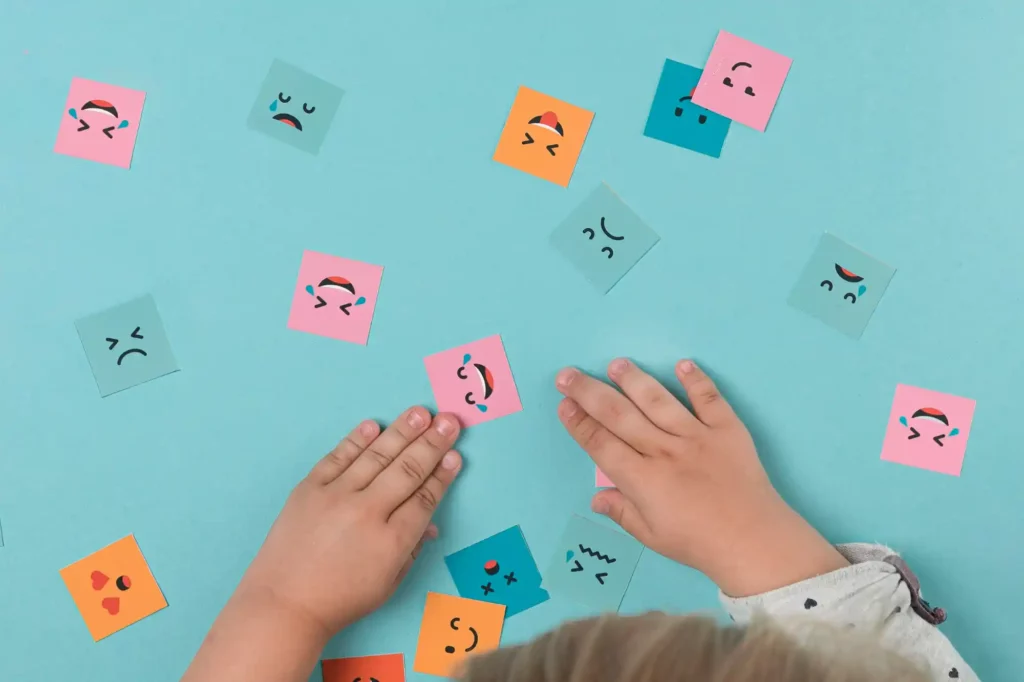
- Help children develop emotional intelligence by teaching them to recognize and comprehend both their own emotions and those of others. Communication and conflict-resolution abilities can be enhanced by emotional intelligence.
- Encourage a growth mindset by showing kids that their skills can improve with practice and effort. They can see difficulties as chances for growth and development by adopting a growth mindset.
- Encourage Children to Take Healthy Risks: Encourage kids to venture outside of their comfort zones and attempt new things. They gain courage and a willingness to try new things as a result of this.
- Maintain a routine that is stable and consistent as much as you can because this can give kids a sense of security. They can better manage stress and uncertainty with predictable routines.
- Encourage children to partake in pursuits and activities that give them a sense of meaning and purpose in order to foster their sense of purpose. They may grow strongly sense of self and direction as a result of this.
- Encourage Activities that Build Resilience by involving kids in challenging activities that also foster resilience, like team sports, the arts, or volunteer work.
- Celebrate even the smallest successes and accomplishments as positive reinforcement. No matter how small the improvement, acknowledging and celebrating it can help a child's confidence.
- If a child has undergone significant trauma or is having trouble bouncing back from traumatic events, you might want to think about getting a mental health professional or a counselor to assist you.
Conclusion
It’s critical to remember that resilience can be built upon and strengthened over time; it is not a fixed trait. In order to help children overcome challenging situations and develop resilience, interventions and support systems can be put in place.Children can develop resilience and thrive in the face of adversity by combining a number of protective factors, such as coping mechanisms and supportive relationships. Always remember that developing resilience is a continuous process that calls for tolerance and reliability. Because every child is different, what works for one child might not work for another.
Consider the child’s age, temperament, and unique needs when developing the strategy. One can support children in building the resilience they need to thrive in the face of life’s challenges by creating a supportive and empowering environment for them. It’s essential for parents, caregivers, and educators to cultivate an atmosphere that encourages children to be resilient. This can be done by assisting them, giving them chances for development and learning, and assisting them in coming up with coping mechanisms. Children’s resilience can be fostered by fostering a growth mindset, teaching problem-solving techniques, and fostering emotional intelligence.
Suggested Reading: Kids Using Gadgets while Eating – Why and How to Stop it?
