

Written by
Donna Lisly Alex, BASLP
Speech Language Pathologist

Clinically Reviewed By
Joan Annie Jacob, BASLP, OPT(Level 2) Speech Language Pathologist
What is Articulation disorder?
Articulation disorder, or misarticulation, is a difficulty that a child faces in producing certain speech sounds which affects their overall speech clarity. This is taking into consideration that the sound error persists beyond the age that a child would typically have mastery over that speech sound. Just as children have motor and language milestones that they achieve at different age ranges, so do they have age ranges at which they acquire proficiency in pronouncing different speech sounds.
What causes articulation disorder?
Articulation disorder most commonly seen in children does not have a known cause although there are certain factors that would likely indicate the occurrence of one. Severe and frequently occurring ear infections such as otitis media or a history of speech-language disorder in the family or birth complications could increase the risk of having misarticulation. Articulation disorders can also be a result of structural abnormalities such as cleft lip and/or palate, tongue tie etc., or difficulties in perceiving as is the case with hearing loss.
What are some signs and symptoms of articulation disorder?
Articulation errors are often noticeable to listeners because they affect a child’s speech clarity. One of the most common articulation errors is substituting one speech sound for another. For example, a child may say “wabbit” instead of “rabbit” by replacing the /r/ sound with /w/. Children may also omit difficult sounds from words or add extra sounds to make pronunciation easier. In some cases, a child may produce a distorted sound—the intended speech sound is present, but it sounds unclear or unusual.
Speech and Language Therapy can help identify the type and cause of these articulation difficulties. Through structured exercises, modelling and regular practice, a speech-language therapist can support the child in producing sounds correctly, improving speech clarity and communicating more confidently.
How is articulation disorder diagnosed?
Articulation disorder can not be self-diagnosed although one can identify the difficulty in a child. A speech-language pathologist is the medical professional to approach when a child’s speech is unintelligible and affects their communication with others, social and mental wellbeing and/or academic performance. A speech-language pathologist does a detailed assessment of the child’s articulatory difficulties and administers the standardized test in order to diagnose articulation disorder.
How do you fix articulation disorder?
Is articulation disorder fixable? Yes, it is. Once a child’s been diagnosed as having articulation disorder, articulation therapy is the next step in the process to treating the disorder. Through structured therapy the speech-language pathologist would target their speech sound errors, starting from their current level of difficulty and then gradually moving up higher levels to pronounce the speech sounds correctly with an overall enhancement of speech clarity.
How can prevent articulation disorder?
Articulation disorder arises when there’s a developmental delay in the acquisition of speech sounds. As parents, make sure to provide clear adult speech sound models to your child when you’re talking to them. If what your child spoke was not clear to you, asking gently to repeat what they said would be good. Avoid responding negatively to their articulatory errors. Rather encourage your child whenever they make attempts to produce the correct speech sounds.
What is Articulation Therapy?
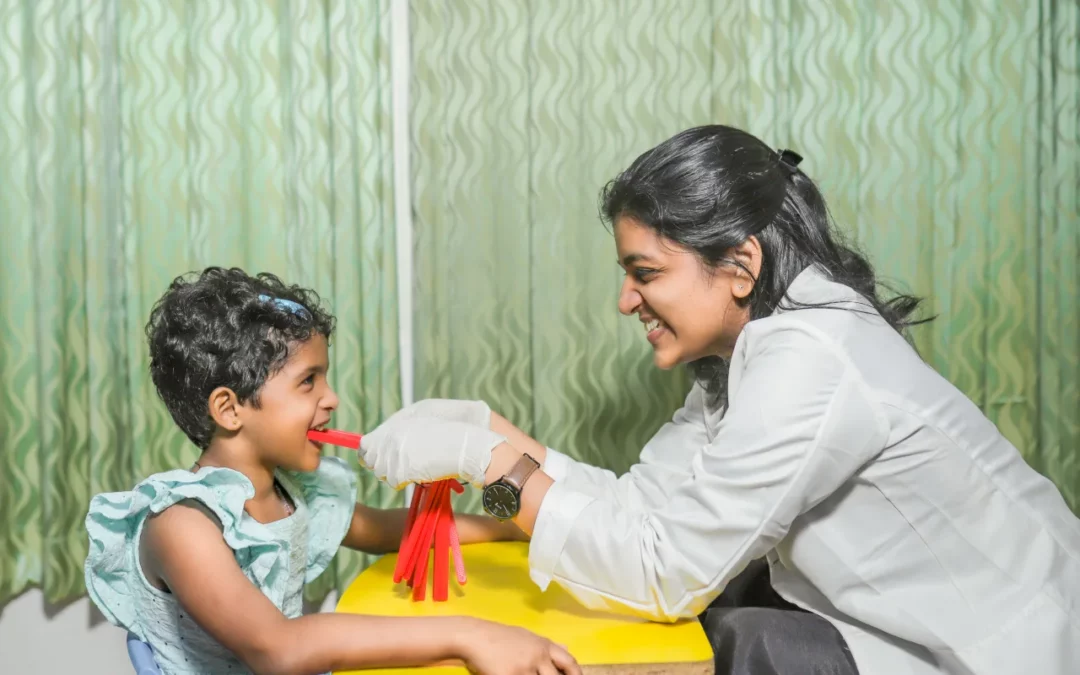
Articulation therapy is a treatment that focuses on correcting the speech sound errors that the child makes due to incorrect movement or position of the speech organs. The treatment plan is individualized to the child’s difficulties identified during assessment.
Process of Articulation Therapy
Therapy begins with looking into whether the child can differentiate between the incorrect production of the speech sound that they make and the correct production of that sound. Once that is established, the incorrect productions are targeted one at a time starting at the sound level, teaching them the movement and position for producing the correct sound. They are engaged through sensories of hearing, touch, and vision to enhance their learning of the sound. Once the child is able to consistently produce the correct sound, the sounds are targeted at the word level and gradually the other higher levels of sentences and conversations to generalize the use of the correct production of the speech sound.
