
01
Strong sensory reactions
Covering the ears, avoiding busy places, disliking grooming or refusing particular clothing and food textures.
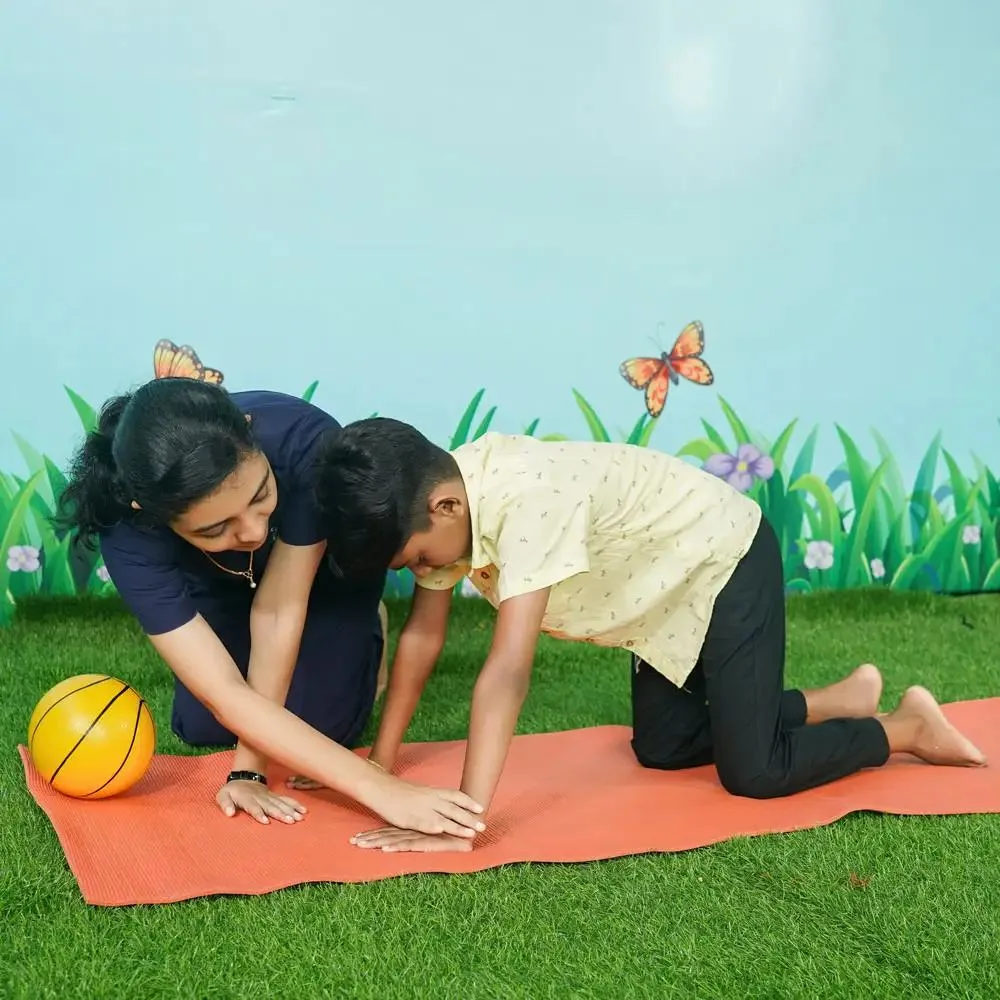
Activities are selected according to each child’s sensory, developmental and functional needs.
Prayatna provides individualized, play-based sensory integration therapy for children who find it difficult to organize and respond to everyday sensory information. Therapy supports movement, learning, self-care, play and social participation.
Children receive information through touch, sound, sight, taste, smell, movement, balance and body awareness. The nervous system organizes this input so they can respond effectively. When processing is difficult, dressing, grooming, busy classrooms, playground movement or food textures may become overwhelming.
Sensory integration therapy is an occupational therapy approach using carefully selected movement, touch and play experiences. Activities are adapted to the child’s responses and functional goals, with the aim of improving participation at home, school and in the community.
Our pediatric occupational therapy in Kochi considers sensory processing together with coordination, motor planning, self-care and learning needs.
Consider an occupational therapy consultation when repeated sensory responses affect comfort, independence, learning, safety or family routines.
Covering the ears, avoiding busy places, disliking grooming or refusing particular clothing and food textures.
Repeated jumping, crashing, spinning, chewing objects or seeking intense movement that disrupts routines.
Appearing clumsy, avoiding playground equipment or struggling with balance and new movement sequences.
Dressing, bathing, toothbrushing, eating, handwriting or classroom sitting regularly causes distress.
Not noticing mess, body position, pressure, temperature or minor injuries as expected.
Difficulty settling, staying alert for learning or recovering from sensory overload.
Recommendations are based on the child’s assessment, daily needs and family priorities, and are reviewed as progress develops.
We discuss development, strengths, routines and the situations requiring support.
Observation, play and functional tasks help identify sensory and motor patterns.
Goals may address dressing, classroom participation, play, feeding or regulation.
Sessions use graded activities while parents receive practical everyday strategies.
Progress differs for every child. Therapy is most useful when sensory activities connect to practical goals. Depending on assessment findings, intervention may support tolerance of everyday sensations, balance, coordination, body awareness, organized movement and independence in age-appropriate routines.
A therapist may use swings, obstacle courses, tactile play, resistance activities and fine-motor tasks. The type and intensity of input are selected according to the child’s response and should be professionally supervised.
Families seeking sensory processing therapy in Kochi can also read about Prayatna’s sensory processing disorder treatment.
Explore Occupational TherapySensory support works best when therapy goals connect with the routines that matter to the child and family.
Prayatna has supported children and families in Kochi for over two decades. Sensory services are provided through the occupational therapy department within a multidisciplinary child development centre, enabling coordinated support when required.
Goals reflect assessment findings, family priorities and functional needs.
Progress is monitored through defined goals and regular review.
Families receive strategies for home, school and community routines.
View Prayatna’s occupational therapy team.
Prayatna is located at 43/1508 A, Pipeline Road, Palarivattom P.O., Kochi – 682 025. The centre is accessible to families travelling from different parts of Kochi and the wider Ernakulam region.
Parents looking for sensory therapy in Kochi can schedule a pediatric occupational therapy assessment when sensory, movement or daily living concerns repeatedly affect their child’s routines.
No. Sensory difficulties may occur with autism, attention difficulties, developmental delays, coordination challenges or other conditions. Assessment helps determine whether sensory-focused intervention is appropriate.
A session may include movement, balance, climbing, tactile play or motor-planning activities. The therapist grades each activity and links it to functional goals.
There is no fixed duration. Frequency depends on the child’s needs, goals, progress and family participation. The plan is reviewed periodically.
Yes, when activities are selected for the individual child. The therapist can suggest safe strategies that fit everyday routines.
Contact Prayatna in Palarivattom by phone or through the appointment page and share the concerns noticed at home or school.
Speak with Prayatna’s team about an occupational therapy and sensory assessment for your child at our Palarivattom centre.