
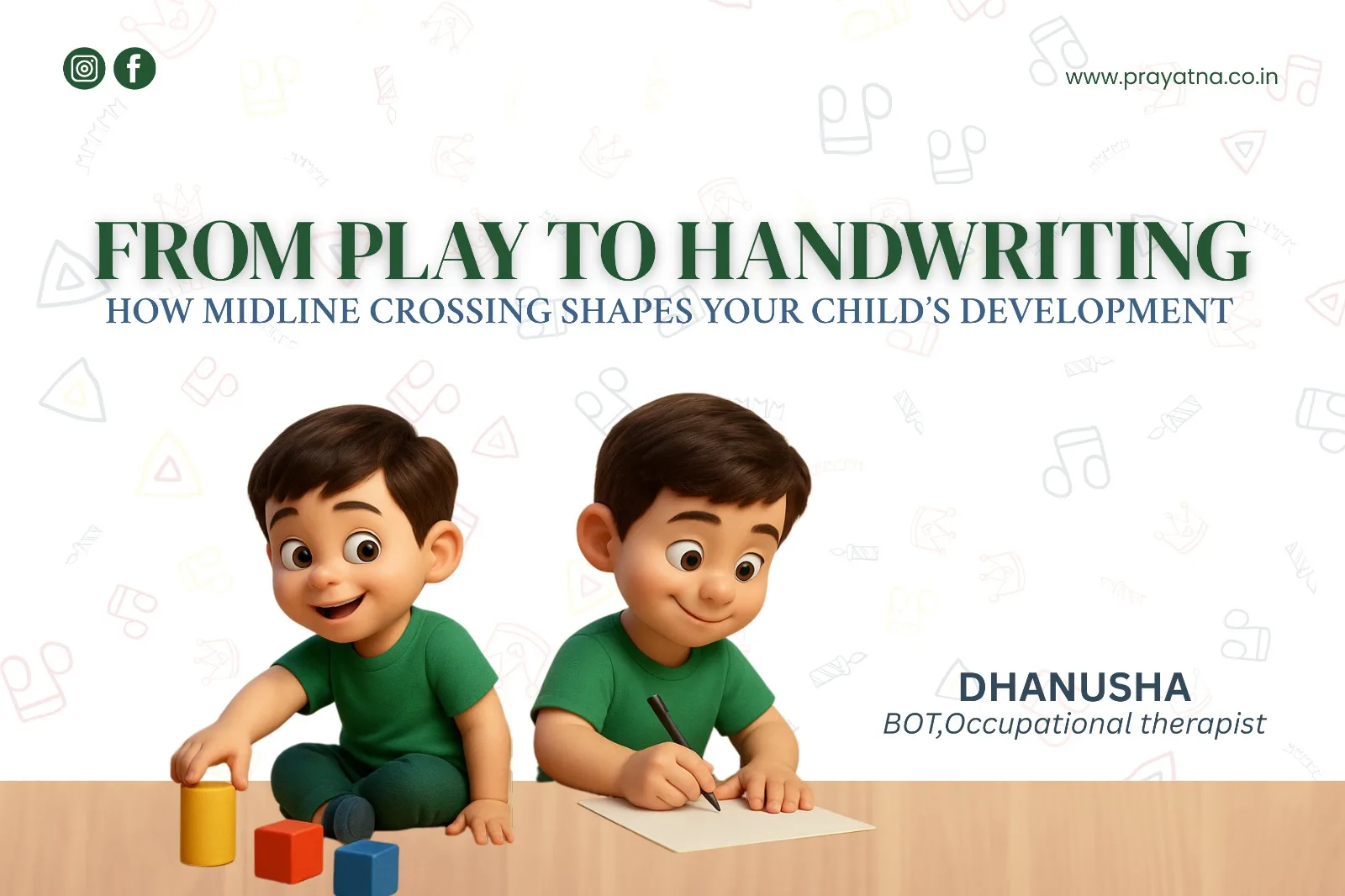
From Play to Handwriting: How Midline Crossing Shapes Your Child’s Development
Did you know that reaching across the body is an important developmental skill for children? This ability is called midline crossing, and it plays a major role in handwriting, reading, dressing, sports, coordination, and everyday independence.
Children who avoid crossing the midline may struggle with fine motor skills, visual tracking, hand dominance, and learning tasks. With proper support and occupational therapy strategies, children can strengthen midline crossing skills and build a strong foundation for learning and daily life.
What Is Midline Crossing?
Midline crossing refers to the ability to move a hand, foot, or eye across the invisible center line of the body to complete a task efficiently.
For example:
- Using the right hand to pick up objects on the left side
- Reaching across the body while drawing or playing
- Tracking words across a page while reading
Midline crossing usually begins developing between 4 and 7 months of age and continues improving throughout childhood.
Why Midline Crossing Matters in Child Development
Midline crossing is essential because it helps both sides of the brain communicate effectively. This skill supports:
- Handwriting development
- Reading fluency
- Bilateral coordination
- Fine motor skills
- Gross motor coordination
- Hand dominance
- Visual tracking
- Daily living skills
Strong midline crossing helps children perform school and self-care activities more smoothly and confidently.
Why Is Midline Crossing Important for Learning and Coordination?
Midline crossing is not just about movement. It directly impacts how children learn, process information, and coordinate their bodies.
When children struggle with midline crossing, they may experience:
- Poor pencil control
- Difficulty reading across a page
- Weak coordination
- Frequent hand switching
- Delayed hand dominance
- Trouble with sports and balance
This happens because smooth communication between the left and right hemispheres of the brain is essential for coordinated movement and learning.
Midline Crossing and Handwriting
Handwriting requires consistent hand dominance, smooth arm movement, and coordinated eye-hand control.
Children with poor midline crossing may:
- Switch hands while writing
- Use awkward pencil grips
- Produce messy handwriting
- Experience writing fatigue
- Have poor letter formation
Improving midline crossing can greatly improve handwriting skills and endurance.
Midline Crossing and Reading Skills
Reading requires the eyes to move smoothly from left to right across a page.
Children with weak midline crossing skills may:
- Lose their place while reading
- Skip words or lines
- Struggle with reading fluency
- Find copying from the board difficult
Strong visual tracking skills depend heavily on midline crossing abilities.
Signs of Midline Crossing Difficulties in Children
Children who struggle with midline crossing often show signs during play, learning, and self-care activities.
Common Signs of Midline Crossing Difficulties
Some common indicators include:
- Frequent hand switching during tasks
- Using each hand only on its own side
- Rotating the trunk instead of reaching across
- Difficulty with visual tracking
- Poor handwriting skills
- Trouble with reading fluency
- Switching feet while kicking a ball
- Weak coordination during sports or play
Parents and teachers should observe these signs early to provide proper support.
How Occupational Therapy Helps Midline Crossing
Occupational therapy plays an important role in improving midline crossing skills in children
Occupational therapists use play-based activities and movement exercises to strengthen:
- Bilateral coordination
- Visual tracking
- Fine motor skills
- Gross motor coordination
- Hand dominance
- Core strength and body awareness
Therapy helps children improve independence in learning, self-care, and everyday activities.
Benefits of Occupational Therapy for Midline Crossing
Occupational therapy can help children:
- Improve handwriting skills
- Strengthen coordination
- Develop hand dominance
- Improve reading fluency
- Increase confidence
- Enhance independence in daily tasks
Best Midline Crossing Activities for Children
Fun and engaging activities can naturally strengthen midline crossing skills.
Gross Motor Midline Crossing Activities
Some effective gross motor exercises include:
- Crawling obstacle courses
- Bear walks and crab walks
- Throwing and catching balls across the body
- Dancing with cross-body movements
- Climbing playground structures
- Jumping jacks and star jumps
- Simon Says cross-body games
These activities improve coordination and brain-body communication.
Fine Motor Midline Crossing Activities
Fine motor activities help improve handwriting and visual coordination.
Examples include:
- Pegboard activities
- Lazy 8 tracing
- Maze tracing with one hand
- Sticker activities across the body
- Sorting objects across the midline
- Puzzles and block building
- Bead threading activities
Daily Living Activities That Improve Midline Crossing
Simple daily activities can also strengthen this skill naturally.
Examples include:
- Buttoning and zipping clothes
- Tying shoelaces
- Brushing hair
- Scooping and pouring sensory materials
- Passing objects across the body
- Drawing large rainbows or patterns
How Parents Can Support Midline Crossing at Home
Parents can support midline crossing development by encouraging active play, movement, and hands-on activities.
Helpful strategies include:
- Limiting excessive screen time
- Encouraging outdoor play
- Practicing bilateral activities daily
- Creating obstacle courses at home
- Engaging children in arts and crafts
- Encouraging crawling and climbing activities
Consistency and fun practice help children improve naturally over time.
Conclusion
Midline crossing is a foundational developmental skill that supports handwriting, reading, coordination, visual tracking, and independence. When children struggle with crossing the midline, it can affect both academic performance and everyday activities.
With the right support, engaging activities, and occupational therapy strategies, children can strengthen midline crossing skills and gain greater confidence in learning, play, and daily life.
Frequently Asked Questions
At what age does midline crossing develop?
Midline crossing begins developing between 4 and 7 months of age and continues refining throughout early childhood.
Is hand switching normal in young children?
Yes. Hand switching is common until around 3–4 years old. By 5–6 years, most children develop clear hand dominance.
What are signs of poor midline crossing?
Common signs include frequent hand switching, messy handwriting, visual tracking problems, weak coordination, and avoiding cross-body movements.
Can midline crossing improve with practice?
Yes. Activities like crawling, ball games, lazy 8 tracing, arts and crafts, and occupational therapy exercises can improve midline crossing significantly.
How does occupational therapy help midline crossing?
Occupational therapy improves bilateral coordination, visual tracking, fine motor skills, and body awareness through structured play-based activities.
